সর্বশেষ
সর্বশেষ

Day: February 22, 2022

ECNEC approves Tk 1,059cr optical fiber network dev project for 5G

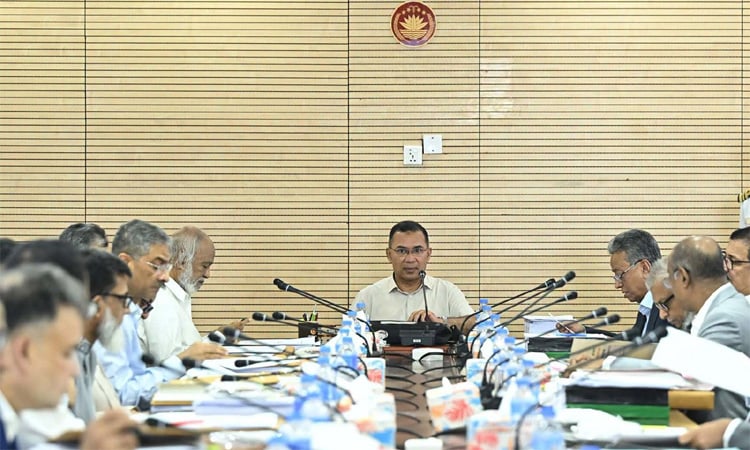
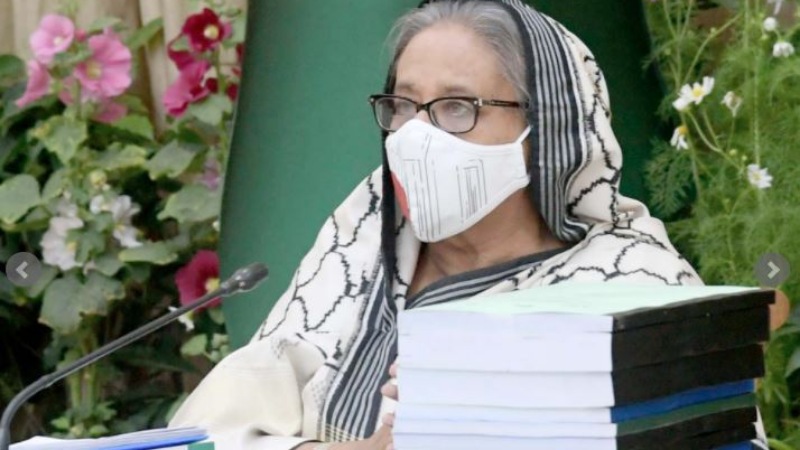
Senior Reporter / Thelegalvoice24 : Dhaka , The Executive Committee of the National Economic Council (ECNEC) today approved a Taka 1,059.10 crore project for developing the optical fiber transmission network of Bangladesh Telecommunications Company Limited (BTCL) for expanding 5G network in the country. The approval came at the 11th meeting of the ECNEC in the current fiscal year (FY22) held with its Chairperson and Prime Minister Sheikh Hasina in the Chair. The premier joined the meeting virtually from her official

Read More »

PM for use of familiar words to make science education easier, accessible

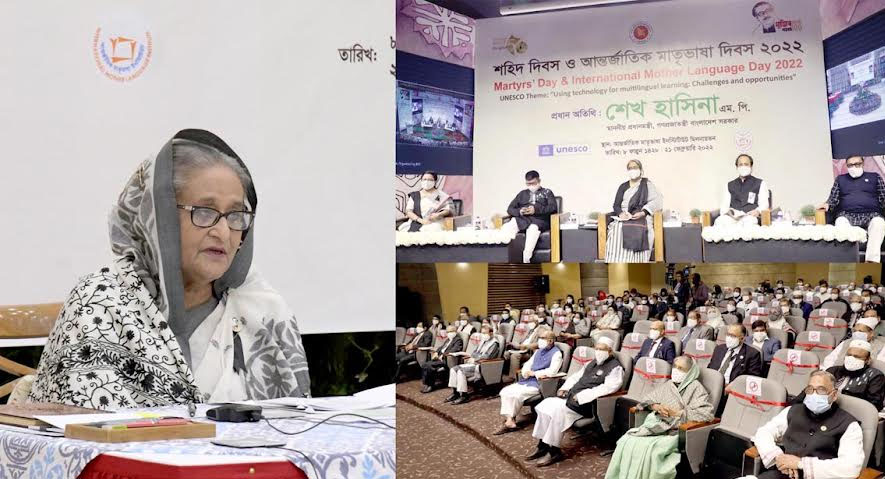
Senior reporter / Thelegalvoice24 : Dhaka , Prime Minister Sheikh Hasina today laid emphasis on the use of familiar words instead of terminology in developing contents to make science education easier and accessible to all. “We have to accept the words that are widely familiar and mostly used in internationally,” she said. The Premier said this while inaugurating the four-day long programmes at the auditorium of International Mother Language Institute (IMLI), joining virtually from her official residence Ganabhaban. The IMLI organised the event on the occasion of Martyrs’ Day and International Mother Language Day-2022. She urged all to avoid terminology in developing content, saying that everyone should keep in mind that the content becomes inaccessible and non-understandable due to more use of terminology. “I don’t believe that we need to use terminology in everywhere.” Referring to the incorporation of over 8,000 foreign words in Bangla language, she called upon all not to be much conservative in using foreign words rather put emphasis on developing easy and accessible content in Bangla using the conventional and familiar science terminology worlds. Sheikh Hasina also asked the International Mother Language Institute to continue their research to ensure that how the language can be made accessible and understandable to all alongside their regular works. With Education Minister Dr Dipu Moni, MP in the chair, Secondary and Higher Secondary Division Secretary Md. Abu Bakr Siddique delivered welcome address. Deputy Minister for Education Mohibul Hassan Chowdhoury, MP and the Head of Office and UNESCO Representative to Bangladesh Beatrice Kaldun also spoke. International Mother Language Institute Director General Md. Belayet Hossain Talukdar gave vote of thanks. Besides, Professor Dr Lafifa Jamal, Chairperson, Department of Robotics and Mechatronics Engineering, University of Dhaka, made keynote presentation. At the outset of the function, Ekushey song was presented while one minute silence was also observed in respect to the martyrs of February 21.   The Prime Minister advised all to be careful in using the terminology, saying that the Bengali word for “content” is “adheya” but many people will not understand if is said where as if content is said it would be understandable easily to all. Putting priority on developing Bangla content on computers and internet alongside making Bangla Keyboard easier to use, said work is going on it. Sheikh Hasina said easy use of scientific terminology in Bengali language is needed to attract more students in science education in the country as no nation can make progress without flourishing the science-based education. “I think no nation can step further without flourishing the science based education,” she opined. She added science-based education, science-based research and knowledge-based research must be used for the welfare of the people that is the most important matter. She continued “Research in every sector such as health, education, science even in industry is utmost needed.” The Premier said research in all subjects including language, literature, culture and science is urgently needed to transform the country from developing to developed one. “Keeping eyes on that we are trying to do our works,” she said. Mentioning that Father of the Nation Bangabandhu Sheikh Mujibur Rahman had given utmost importance to the practice of science and scientific research, she said he (Bangabandhu) had given the responsibility to Dr Muhammad Qudrat-i-Khuda, the best scientist of that time, to form the country’s Education Commission during the reconstruction of the war-torn country. Turing on the history of the Language Movement, the Prime Minister said although the February 21, 1952 saw the tragic incident, the movement for mother language began much earlier and Bangabandhu was one of the initiators of the movement. At the proposal of Bangabandhu Sheikh Mujibur Rahman, she said, the State Language Action Council was formed comprising Chhatra League, Tamuddin Majlish and other student organisations in 1948. She said the government has developed apps in nine languages and created many opportunities for freelancers, and added that her government has also adopted learning and earning project so that people in grassroots level can earn money through computers staying at home.

Read More »

US CDC isn’t publishing large portions of the COVID data it collects

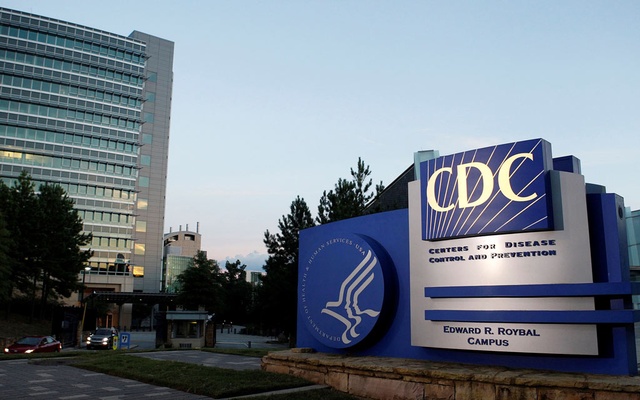
Apoorva Mandavilli, The New York  Times Published: 2022-02-21 10:32:11 BdST//Thelegalvoice24 : A general view of the US Centers for Disease Control and Prevention (CDC) headquarters in Atlanta, Georgia September 30, 2014. REUTERS For more than a year, the Centers for Disease Control and Prevention has collected data on hospitalisations for COVID-19 in the United States and broken it down by age, race and vaccination status. But it has not made most of the information public. When the CDC published the first significant data two weeks ago on the effectiveness of boosters in adults younger than 65, it left out the numbers for a huge portion of that population: 18- to 49-year-olds, the group the data showed was least likely to benefit from extra shots, because the first two doses already left them well-protected. The agency recently debuted a dashboard of wastewater data on its website that will be updated daily and might provide early signals of an oncoming surge of COVID-19 cases. Some states and localities had been sharing wastewater information with the agency since the start of the pandemic, but it had never before released those findings. Two full years into the pandemic, the agency leading the country’s response to the public health emergency has published only a tiny fraction of the data it has collected, several people familiar with the data said. Much of the withheld information could help state and local health officials better target their efforts to bring the virus under control. Detailed, timely data on hospitalisations by age and race would help health officials identify and help the populations at highest risk. Information on hospitalizations and death by age and vaccination status would have helped inform whether healthy adults needed booster shots. And wastewater surveillance across the nation would spot outbreaks and emerging variants early. Without the booster data for 18- to 49-year-olds, the outside experts whom federal health agencies look to for advice had to rely on numbers from Israel to make their recommendations on the shots. Kristen Nordlund, a spokesperson for the CDC, said the agency has been slow to release the different streams of data “because basically, at the end of the day, it’s not yet ready for prime time.” She said the agency’s “priority when gathering any data is to ensure that it’s accurate and actionable.” Another reason is fear that the information might be misinterpreted, Nordlund said. Dr Daniel Jernigan, the agency’s deputy director for public health science and surveillance said the pandemic exposed the fact that data systems at the CDC, and at the state levels, are outmoded and not up to handling large volumes of data. CDC scientists are trying to modernise the systems, he said. “We want better, faster data that can lead to decision making and actions at all levels of public health, that can help us eliminate the lag in data that has held us back,” he added. The CDC also has multiple bureaucratic divisions that must sign off on important publications, and its officials must alert the Department of Health and Human Services — which oversees the agency — and the White House of their plans. The agency often shares data with states and partners before making data public. Those steps can add delays. “The CDC is a political organization as much as it is a public health organization,” said Samuel Scarpino, managing director of pathogen surveillance at the Rockefeller Foundation’s Pandemic Prevention Institute. “The steps that it takes to get something like this released are often well outside of the control of many of the scientists that work at the CDC.” The performance of vaccines and boosters, particularly in younger adults, is among the most glaring omissions in data the CDC has made public. Last year, the agency repeatedly came under fire for not tracking so-called breakthrough infections in vaccinated Americans, and focusing only on individuals who became ill enough to be hospitalised or die. The agency presented that information as risk comparisons with unvaccinated adults, rather than provide timely snapshots of hospitalised patients stratified by age, sex, race and vaccination status. But the CDC has been routinely collecting information since the COVID-19 vaccines were first rolled out last year, according to a federal official familiar with the effort. The agency has been reluctant to make those figures public, the official said, because they might be misinterpreted as the vaccines being ineffective. Nordlund confirmed that as one of the reasons. Another reason, she said, is that the data represents only 10% of the population of the US But the CDC has relied on the same level of sampling to track influenza for years. Some outside public health experts were stunned to hear that information exists. “We have been begging for that sort of granularity of da

Read More »

PM urges simplifying scientific terms in Bengali for students’ benefit BANGLADESH

Senior Reporter / Thelegalvoice24 : Prime Minister Sheikh Hasina on Monday called for simplifying the use of scientific terminology in Bengali to attract more students to study science. “I think that no nation can step forward without flourishing of the science based education,” she said while inaugurating a four-day programme of the International Mother Language Institute at Shegunbagicha to mark Amar Ekushey and the International Mother Language Day. She said that Bangladesh has to go with the science and the country can’t reverse its wheels. “We have to pursue technological education. We can’t advance without it,” she said. Sheikh Hasina said that Science based education, science based research and the knowledge based on the research must be used for the welfare of the people and that is the most important matter. “Research in every sector, including health, education, science and even in industry is of utmost importance,” she said. Regarding the uses of scientific terminology, she said that use of a tough terminology in Bengali language of a scientific word might not be understandable for all. “Widely used words and internationally accepted words that can be used as it is, we have to accept the word that is used widely in the international arena,” she said. In this connection, she said that using tough terminology could bring non-understandable situation and that should be avoided. “I do not believe in using terminology or translation everywhere,” she said. The PM said that in science there are many words inducted from many languages included English, French and many others. She also said that in Bengali language there are about 8000 foreign words inducted. “We should not be so much conservative in this regard, the commonly used scientific terms can be used in Bengali language for easy learning of science,” she opined. Sheikh Hasina said that to transform the country from developing to developed, practice and research in all subjects including language, literature, culture and science is urgently needed. “Keeping eyes on that we are trying to do our works,” she said. Focusing on the history of the Language Movement, she said although the February 21, 1952 saw the tragic incident, the movement for mother language began much earlier. At the proposal of Bangabandhu, she said, the State Language Action Council was formed comprising Chhatra League, Tamuddin Majlish and other student organisations in 1948. Education Minister Dipu Moni, Deputy Minister for Education Barrister Mohibul Hasan Chowdhury Nowfel and Head of the Office and UNESCO Representative to Bangladesh Beatrice Kaldun spoke, among others, on the occasion. Professor of the Department of Robotics and Mechatronics Engineering, University of Dhaka Dr. Lafifa Jamal presented the keynote speech, while Secretary of Secondary and Higher Education Division of Education Ministry Md Abu Bakar Siddique gave the welcome address and Director General of the International Mother Language Institute Md. Belayet Hossain Talukdar delivered the vote of thanks. At the outset of the programme, one minute silence was observed to show respect to the language movement heroes for their sacrifice.

Read More »